The Genium: A Modern Serif for Timeless Brand Identity
The Visual Soul of a Prestigious Typeface
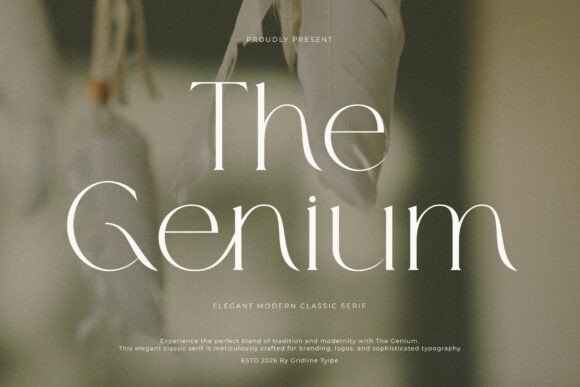
When you first encounter The Genium, it feels less like a collection of letters and more like a carefully crafted artifact. This is a premium font designed for the intersection of history and contemporary luxury. At its core, The Genium is a high-fashion display serif, but that generic classification barely scratches the surface of its aesthetic. It possesses a "prestigious-and-poetic" soul, achieved through a delicate balance of high-contrast strokes. You will notice that the thick lines are robust and confident, while the thin hairlines are drawn with surgical precision.
What truly defines this typeface is its rhythmic movement. The letterforms feature sweeping curves that guide the eye fluidly from one character to the next, ending in razor-sharp terminals. These details bridge the gap between the archival Roman excellence of old-world printing and the crisp demands of modern typography. It carries a medium structural weight, giving it an intellectual personality that commands attention without shouting. For a designer or brand strategist, this means you are working with a tool that already carries a distinct voice—one that speaks of heritage, intelligence, and quiet confidence.
Strategic Applications in Branding and Editorial Design
Choosing the right display font is often the tipping point between a brand that looks generic and one that feels curated. The Genium excels in environments where exclusivity and elegance are paramount. If you are an independent luxury house, a boutique jewelry designer, or launching a line of premium skincare, this font provides an immediate visual shorthand for high quality.
Consider the specific applications where this serif font shines brightest:
- Logo Design: The sharp terminals and high contrast make for memorable wordmarks. It creates a brand identity that feels established and trustworthy from day one.
- Packaging Design: On physical goods, such as perfume boxes or cosmetic bottles, the fine details of The Genium catch the light beautifully, adding a tactile sense of luxury to the unboxing experience.
- Editorial Design: For magazine headers, book titles, or blog headers, it commands the page. It pairs exceptionally well with clean layouts, allowing the typography to serve as the primary visual element.
- Social Media Graphics: In the fast-scrolling world of digital marketing, high-impact headers are essential. The Genium creates "sophisticated-and-seamless" imagery that stops the scroll, particularly for lifestyle, fashion, and architecture accounts.
However, it is important to treat The Genium as a statement piece. Because it has such a strong personality, it is best suited for headlines, titles, and logos rather than body copy. Using it for long paragraphs might fatigue the reader's eye due to the high contrast, but used sparingly, it elevates the perceived value of the entire project.
Mastering Visual Hierarchy and Readability
Effective web design and print layout rely heavily on visual hierarchy—the arrangement of elements to show order of importance. The Genium is a master tool for establishing this hierarchy. By using it for your H1 tags or main headlines, you instantly signal to the audience that what follows is significant. The intellectual weight of the font helps structure the reading experience, guiding users through your content logically.
Readability is a nuanced concept with creative fonts. While The Genium is not designed for small body text, its legibility at large display sizes is excellent. The distinct letterforms ensure that even with the sweeping curves, each character is instantly recognizable. This clarity is vital for logo design and signage, where a quick glance must be enough to convey the message.
Furthermore, consistency in typography builds trust. When you apply The Genium across your website headers, email marketing subject lines, and physical stationery, you create a cohesive ecosystem. This repetition reinforces your brand’s professionalism. Customers subconsciously associate consistent, high-quality visuals with reliable products and services.
Pairing The Genium with Other Design Assets
No typeface is an island. The true power of a premium font is often revealed in how it interacts with other type styles. Because The Genium has such a distinct, classical-modern vibe, it requires careful pairing to maintain balance. The goal is contrast, not competition.
A classic strategy is to pair this serif font with a clean, geometric sans serif font. The simplicity of the sans serif will recede into the background, allowing the intricate details of The Genium to take center stage. For example, using a light-weight sans serif for subheadings and body text creates a sophisticated rhythm that feels professional and easy to digest.
Alternatively, for a more editorial or romantic aesthetic, you might explore pairing it with a subtle script font or handwritten font for accents. However, exercise caution here; if the script is too ornate, it can clash with the sweeping curves of The Genium. Look for a script that is loose and modern rather than traditional copperplate. Ultimately, testing is key. Mock up your designs in real-world scenarios—view the font on a mobile device screen, on a business card, and on a billboard mockup—to ensure the pairing holds up across different scales and mediums.
Practical Implementation and Licensing
Before integrating The Genium into your workflow, it is prudent to review the technical details. Check the included styles; often, high-quality display fonts come with a family of weights or optical sizes that can help you fine-tune the look. Ensure the licensing aligns with your needs—whether for a single desktop installation for a crafter or a multi-seat commercial license for a marketing agency.
For the best results, treat this font as a key design asset. Install it properly, create a typography style guide for your team, and define exactly where and how it should be used. By respecting the font's personality and deploying it with intention, you move beyond simple decoration. You begin to use typography as a strategic lever, turning your visual storytelling into a powerful engine for brand recognition and audience engagement.