Derbe: Where Royal Elegance Meets Nature's Charm
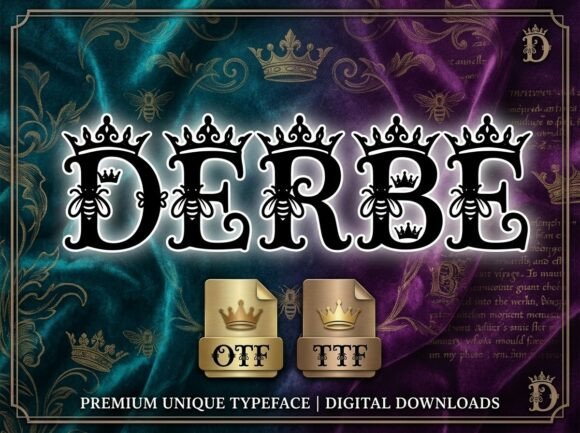
When you first encounter the Derbe typeface, you're greeted by something genuinely unexpected in the world of premium fonts. This isn't just another serif font with fancy serifs and calligraphic swashes. Derbe takes a bold, classical foundation—those sturdy, traditional letterforms you'd expect from a high-end display font—and crowns each character with an ornate tiara. Then, to complete the visual story, every letter features a delicately illustrated honeybee resting on or near its structure. The result is a typeface that feels simultaneously regal and organic, stately yet playful, luxurious but approachable.
A Typeface with a Visual Narrative
What makes Derbe stand apart from countless other display fonts is its ability to tell a story before you even read a single word. The bold serif construction gives every letterform weight and authority, creating an immediate sense of trust and tradition. The tiara elements add a layer of ceremonial grandeur—think royal crests, estate branding, and the kind of visual language you'd find on invitations to a garden party at a countryside manor. Meanwhile, the honeybee illustrations introduce warmth, nature, and a handcrafted quality that softens the formality. This combination creates a personality that feels artisanal without being rustic, prestigious without being cold.
As a designer, I find this duality fascinating because it solves a common branding challenge. Many small businesses and creative entrepreneurs want their brand identity to convey both quality and approachability. A purely luxurious typeface can feel intimidating or distant. A purely whimsical font might lack the authority to justify premium pricing. Derbe occupies that rare middle ground where elegance and warmth coexist naturally.
Where Derbe Truly Shines
Not every project calls for a font like Derbe, and that's actually part of its strength. This is a creative font with a very specific personality, which means when it fits, it fits beautifully. When it doesn't, forcing it into the wrong context would feel awkward for both the designer and the audience.
Boutique honey and apothecary branding is perhaps the most natural home for this typeface. If you're designing a logo or packaging for artisanal honey, beeswax candles, herbal remedies, or botanical skincare, Derbe practically does the creative direction for you. The honeybee motifs aren't decorative afterthoughts—they're integral to the visual identity, creating instant recognition and thematic cohesion.
High-end garden nursery logos and botanical event stationery also benefit enormously. Imagine wedding invitations for a garden ceremony, or the branding for a plant shop that specializes in heirloom varieties and curated terrariums. Derbe brings that cultivated, thoughtful aesthetic that says the person behind this brand cares deeply about craft and detail.
Royal-themed event design is another strong application. Fundraising galas, themed parties, theatrical productions, or even historical fiction book covers can leverage Derbe's crown-topped letterforms to establish setting and mood instantly. The font does heavy atmospheric lifting, which means you can simplify other design elements and still achieve a rich visual experience.
Editorial design and publishing projects—particularly book covers, chapter headings, or magazine features—can use Derbe strategically for titles and pull quotes. It works exceptionally well for lifestyle publications, nature writing, food and drink editorial, and anything celebrating slow living or artisanal culture.
Understanding Readability and Visual Hierarchy
Here's where practical design thinking matters. Derbe is a display font, which means it's engineered for impact at larger sizes rather than extended reading at small ones. Using it for body copy in a brochure or long-form website text would compromise readability and frustrate your audience. The ornate details that make each character so distinctive at headline size become visual noise when compressed into paragraph text.
Instead, think of Derbe as your headline and logo typeface, then pair it with a clean, highly legible companion for supporting text. A simple sans serif font works beautifully here—something with generous x-height and open letterforms that won't compete with Derbe's personality but will provide clear contrast. Alternatively, a straightforward serif font with minimal ornamentation can create a more traditional pairing while maintaining the classical undertone that Derbe establishes.
The key principle is visual hierarchy. When Derbe handles your headlines, subheadings, and brand name, it creates focal points that draw the eye and establish mood. Your supporting typeface then carries the informational content without distraction. This division of labor keeps your layouts organized and your audience engaged.
Practical Considerations Before You Commit
Before integrating Derbe into any project, spend time evaluating whether its personality genuinely aligns with your brand or client's positioning. Pull together reference images, competitor analysis, and mood boards. Does the audience respond to ornate, nature-inspired aesthetics? Does the brand story involve craftsmanship, heritage, or botanical themes? If the answer is yes, Derbe likely strengthens that narrative. If the brand identity leans minimalist, tech-forward, or aggressively modern, this typeface would create dissonance rather than harmony.
Test font pairings early in your process. Set a headline in Derbe and experiment with at least three or four different body fonts. Compare how each combination reads on screen and in print. Pay attention to weight contrast, x-height relationships, and overall mood consistency. Sometimes a pairing that seems logical on paper feels unbalanced in practice, so trust your eye during these tests.
Review the included character set, styles, and licensing terms carefully. A premium font like Derbe should come with clear commercial licensing that covers your intended use—whether that's client work, product packaging, digital advertising, or merchandise. Understanding these terms upfront prevents legal complications later and ensures you're using the typeface responsibly.
Finally, consider your medium. Derbe's detailed illustrations may reproduce differently across print substrates, screen resolutions, and sizes. Test at the actual scale where the font will appear. A tiara detail that looks crisp on your 27-inch monitor might lose definition on a small product label or social media thumbnail. Adjust sizing, spacing, or application accordingly to preserve the visual integrity that makes this typeface special.
Building Brand Recognition with Character
What ultimately makes a font like Derbe valuable as a design asset isn't just its aesthetic appeal—it's the memorability factor. In crowded markets where dozens of brands use similar sans serif fonts and predictable color palettes, a distinctive typeface becomes a competitive advantage. When customers see that crowned letterform with its honeybee companion, they recognize the brand before reading a single word. That kind of instant recognition is extraordinarily difficult to achieve, and a thoughtfully chosen typeface contributes significantly to building it over time.
Derbe won't be right for every project, and that specificity is exactly what gives it power. When the fit is right, this typeface elevates brand identity from generic to genuinely memorable, transforming ordinary text into a visual experience that resonates with audiences and communicates values without explanation.