Step Into a World of Timeless Elegance with Foley
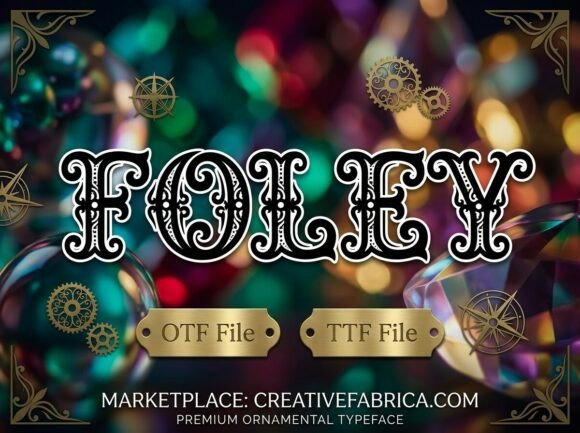
In a digital landscape saturated with minimalist sans serifs and playful script fonts, finding a typeface that exudes genuine, old-world sophistication can feel like searching for a needle in a haystack. Enter Foley, a premium ornamental typeface that doesn't just speak of history—it practically whispers it into your design. Inspired by the meticulous craftsmanship of the Victorian era, Foley is a display font built for moments that demand more than just attention; they demand reverence. It features intricate internal filigree, rhythmic dot patterns, and dramatic, sweeping flourishes on every terminal, creating a visual rhythm that feels both regal and artisanal.
Unlike modern typography trends that often strip away detail for the sake of scalability, Foley leans into complexity. Its balanced visual weight and polished posture make it a standout choice for projects where the typography is the centerpiece, not just a supporting actor. If you are designing a logo for a luxury boutique, laying out a steampunk-themed editorial, or crafting a label for a high-end spirit, this font brings a level of prestige that is hard to replicate with standard design assets. It is a typeface that doesn't just sit on the page; it commands the room.
Where Foley Elevates Your Brand Identity
Understanding where a creative font like Foley fits into your workflow is crucial. Because of its high level of detail, it functions best as a headline or logo design typeface rather than a body text solution. Imagine using it for the masthead of a bespoke event invitation. The intricate terminals and Victorian styling immediately signal to the recipient that this is not a casual gathering, but a curated experience. The font acts as a visual cue, setting expectations before a single word of the copy is read.
In the realm of packaging design, particularly for artisanal goods, Foley shines brightly. Think about high-end chocolate boxes, craft gin bottles, or specialty coffee bags. These products rely on a brand identity that suggests care, tradition, and quality. Using Foley on these physical assets creates a tactile connection with the customer. It suggests that the product inside is as carefully crafted as the typography on the outside. For publishers and content creators working on book covers—especially within historical fiction, fantasy, or romance genres—Foley provides that "unforgettable and legendary personality" that helps a title stand out on a crowded shelf or a digital storefront.
Mastering Font Pairing and Visual Hierarchy
One of the most common challenges with ornamental serif fonts is finding the right partner for them. Because Foley has such a strong voice, pairing it requires a bit of restraint. A general rule of thumb in design strategy is to contrast high-detail display fonts with clean, neutral counterparts. To maintain readability and visual hierarchy, consider pairing Foley with a clean sans serif font or a simple geometric sans for your subheadings and body text. This allows the flourishes of Foley to take center stage without overwhelming the reader's eye.
For example, if you are designing a web layout or social media graphics, you might use Foley for the main H1 tag to grab attention, but switch to a legible sans serif for the caption or description. This contrast creates a dynamic tension that feels professional and intentional. It ensures that your brand identity feels established and sophisticated, rather than cluttered. When testing your font pairing, pay close attention to the x-height and visual weight. You want the secondary font to support Foley, not compete with it. This balance is key to effective editorial design and modern marketing materials.
Practical Considerations for Using This Premium Font
While the aesthetic appeal of Foley is undeniable, practical application is where a designer earns their keep. First, consider the medium. Because of its intricate filigree, Foley performs exceptionally well in print at larger sizes, such as on posters or signage. However, in web design, you must be mindful of rendering. At very small sizes on low-resolution screens, the fine details of the font might blur or clog. Always test the font across different devices and browsers to ensure the "soulful, vintage grace" translates effectively to the digital realm.
Licensing is another critical factor for entrepreneurs and small business owners. As a commercial font, Foley comes with specific usage rights. Ensure that your license covers all intended applications, whether it’s for a global advertising campaign or a local community event. Furthermore, look into the included styles. Does the typeface family offer different weights or stylistic alternates? Having access to these variations can add depth to your design system, allowing you to maintain brand consistency while introducing subtle variety across different touchpoints.
Final Thoughts on Artisanal Prestige
Ultimately, choosing a font like Foley is about making a statement. It is about rejecting the generic and embracing a design language that values history, detail, and personality. For designers, marketers, and creators looking to inject a sense of polished artisanal prestige into their work, Foley offers a robust solution. It transforms standard layouts into visual stories, ensuring that your message is not only seen but felt. By carefully integrating this typeface into your creative toolkit, you can elevate your projects from merely functional to truly legendary.