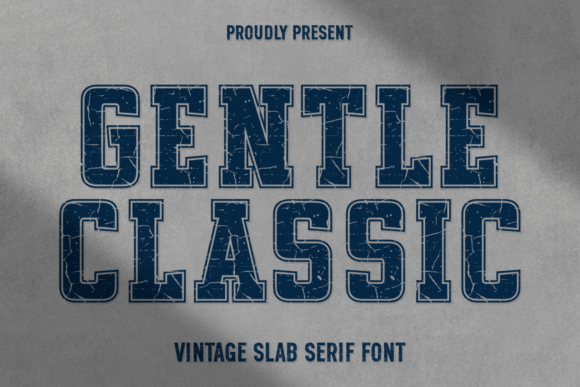
Gentle Classic: A Typeface with Built-In Heritage
Finding a typeface that carries genuine historical weight without feeling like a costume can be a real challenge for designers and brand builders. Many vintage-inspired fonts lean too heavily into novelty, sacrificing versatility for a fleeting trend. Gentle Classic takes a different path. It’s a premium display font rooted in the slab serif tradition, engineered to feel substantial and timeless. The moment you see it, you understand its purpose: it’s a hero font for projects that demand presence, durability, and a story.
An Architectural Foundation with a Human Touch
What sets Gentle Classic apart is its careful balance. The letterforms have the heavy, blocky structure of classic architectural lettering—the kind you’d see chiseled into stone on old university buildings or industrial warehouses. This gives it an immediate sense of establishment and authority. However, it avoids looking cold or sterile. A subtle, weathered texture runs through each character, suggesting age, use, and authentic craftsmanship. It’s the typographic equivalent of a well-worn leather journal or a vintage varsity jacket: it looks better because it has a history.
This combination makes it incredibly effective for brand identity. A brewery using Gentle Classic for its logo isn’t just choosing a font; it’s adopting a persona. It tells customers, “We value tradition, quality materials, and time-honored methods.” The same applies to a line of rugged outdoor apparel or a specialty coffee roaster. The font’s personality does a lot of the heavy lifting in establishing a credible, premium feel from the first glance.
Where Gentle Classic Truly Excels
While it’s a standout creative font, its strength lies in specific applications where its character can shine without overwhelming a design. Think of it as a powerful spice—a little goes a long way.
- Logo Design & Branding: This is its natural habitat. It creates logos that are instantly recognizable and feel built to last. It’s particularly effective for brewery logos, vintage apparel design, athletic branding for teams or gyms, and rustic product packaging for goods like hot sauce, artisanal tools, or handmade soaps.
- Editorial & Publishing: Use it for magazine mastheads, chapter titles in books, or pull quotes in articles. It adds a touch of varsity heritage or old-school journalism credibility, making content feel more authoritative and curated.
- Digital & Social Media: In a sea of minimalist sans serif fonts, Gentle Classic is a scroll-stopper. It works beautifully for social media graphics where you need a bold headline, website hero sections, or video title cards. Its textured look often translates well even at screen resolutions.
- Physical Products & Packaging: This is where its tactile quality really comes alive. On a bottle label, a tote bag, or a tin can, the distressed texture adds a layer of perceived quality and authenticity that clean, digital-looking fonts can’t match.
Making It Work: Practical Guidance for Your Projects
Adopting a typeface like Gentle Classic is a strategic decision. Here’s how to integrate it effectively into your workflow, whether you’re a designer, a small business owner, or a content creator.
Evaluating the Fit
Before you commit, ask yourself: does my project’s story align with themes of craftsmanship, heritage, or rugged durability? If you’re designing for a sleek tech startup or a delicate florist, this font will likely feel dissonant. But if you’re working on a craft distillery’s packaging design, a local sports team’s jerseys, or a blog about vintage restoration, it’s a perfect match.
Mastering Font Pairing
Because Gentle Classic is a bold display font, it needs a partner. It generally pairs best with clean, neutral typefaces that let it dominate the headlines. A simple, geometric sans serif font for body copy creates a beautiful contrast, allowing the main message to pop while ensuring readability. You could also pair it with a classic, readable serif font for a more traditional, editorial feel. Avoid pairing it with other decorative, script fonts, or handwritten fonts—the combination will feel chaotic and undermine the clarity of your message.
Testing for Readability
As a slab serif font with a heavy weight and texture, Gentle Classic is not intended for long paragraphs of body text. Its magic is in headlines, logos, and short, impactful statements. Always test it at the size you plan to use. On a website, check how it renders on different screens. In print, get a proof. The goal is to ensure the textural detail enhances rather than hinders legibility, especially at smaller sizes or on low-resolution prints.
Understanding the Asset
When you acquire this premium font, you’re getting more than a single file. Review what’s included: are there multiple weights (like Regular and Bold)? Are there stylistic alternates or ligatures that can add unique flair to your designs? Understanding these design assets gives you more creative control. Furthermore, always confirm the commercial font licensing terms. Ensure the license covers your intended use—whether it’s for a client’s logo, merchandise for sale, or a published book.
The Final Check
Step back from your design. Does Gentle Classic feel like an integral part of the story, or is it just a trendy decoration? The best uses of this typeface are those where its character reinforces the core message. It should feel less like a font choice and more like an inevitable part of the brand’s voice. Used thoughtfully, it doesn’t just display words—it channels the spirit of the past and builds a foundation of trust and recognition that modern, generic typography often struggles to achieve.